
Introduction
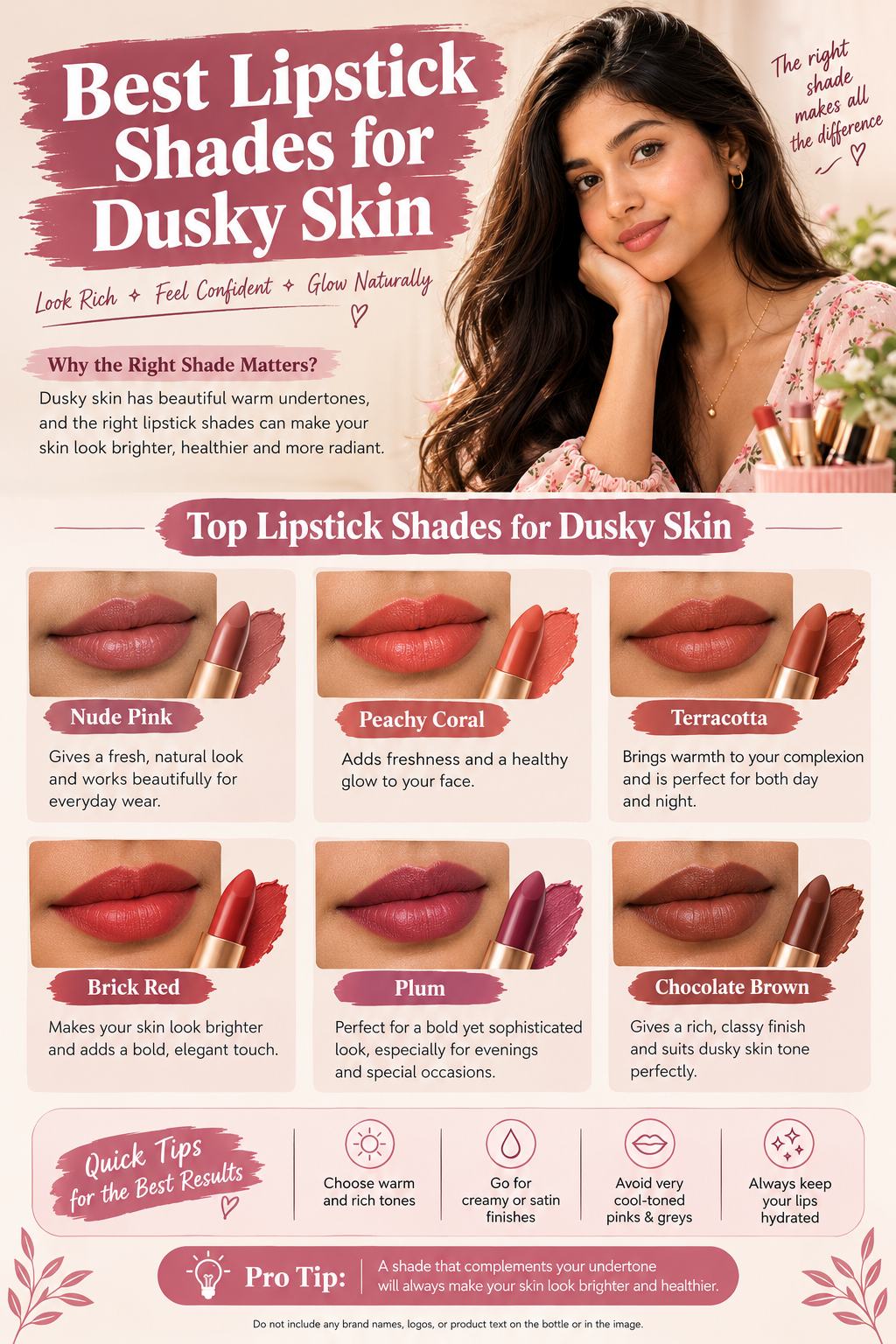
Finding the right best lipstick shades for dusky skin. when you have dusky skin can feel unnecessarily complicated. Walk into any beauty store in India and you’ll notice most shade recommendations seem built around fair or medium-fair complexions — and the ones marketed for “Indian skin” often default to the same few safe browns and nudes, as though dusky skin only suits one narrow band of colours.
The reality is quite different. Dusky skin has a natural depth and warmth that actually carries bold, rich, and unconventional shades better than lighter skin tones do. Colours that look overwhelming on fair skin — deep berries, rich brick reds, warm terracottas — tend to look balanced and intentional on dusky complexions. The trick isn’t avoiding colour; it’s understanding which undertones work with your skin rather than against it.
This guide breaks down exactly that: how to identify your undertone, which shade families genuinely flatter dusky skin, which ones to approach carefully, and specific shade recommendations across different finishes and occasions.
What Exactly Is “Dusky” Skin?
Before getting into shades, it’s worth clarifying the term, since it gets used loosely. Dusky skin generally refers to medium-deep to deep complexions with warm, golden, or olive undertones — very common across South Asia. It sits between medium and deep on most foundation shade ranges.
The important thing to understand is that “dusky” describes depth, not undertone. Two people can both have dusky skin and still need completely different lipstick shades depending on whether their undertone is warm, cool, or neutral. This is exactly why generic “best shades for dusky skin” lists often disappoint — they treat depth as the only variable.
How to Find Your Undertone (The Step Most People Skip)
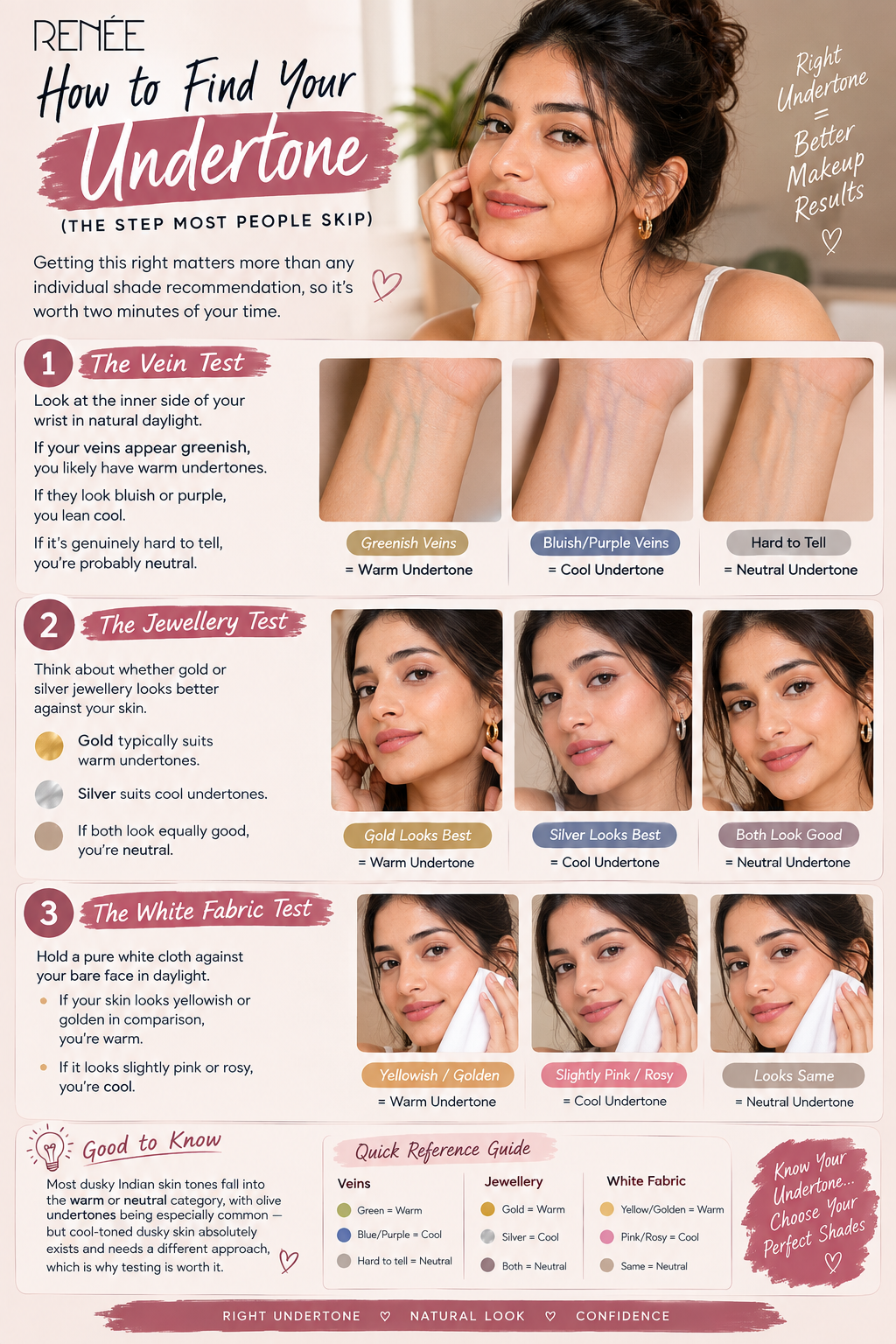
Getting this right matters more than any individual shade recommendation, so it’s worth two minutes of your time.
The vein test: Look at the inner side of your wrist in natural daylight. If your veins appear greenish, you likely have warm undertones. If they look bluish or purple, you lean cool. If it’s genuinely hard to tell, you’re probably neutral.
The jewellery test: Think about whether gold or silver jewellery looks better against your skin. Gold typically suits warm undertones, silver suits cool, and if both look equally good, you’re neutral.
The white fabric test: Hold a pure white cloth against your bare face in daylight. If your skin looks yellowish or golden in comparison, you’re warm. If it looks slightly pink or rosy, you’re cool.
Most dusky Indian skin tones fall into the warm or neutral category, with olive undertones being especially common — but cool-toned dusky skin absolutely exists and needs a different approach, which is why testing is worth it.
Shade Families That Genuinely Flatter Dusky Skin
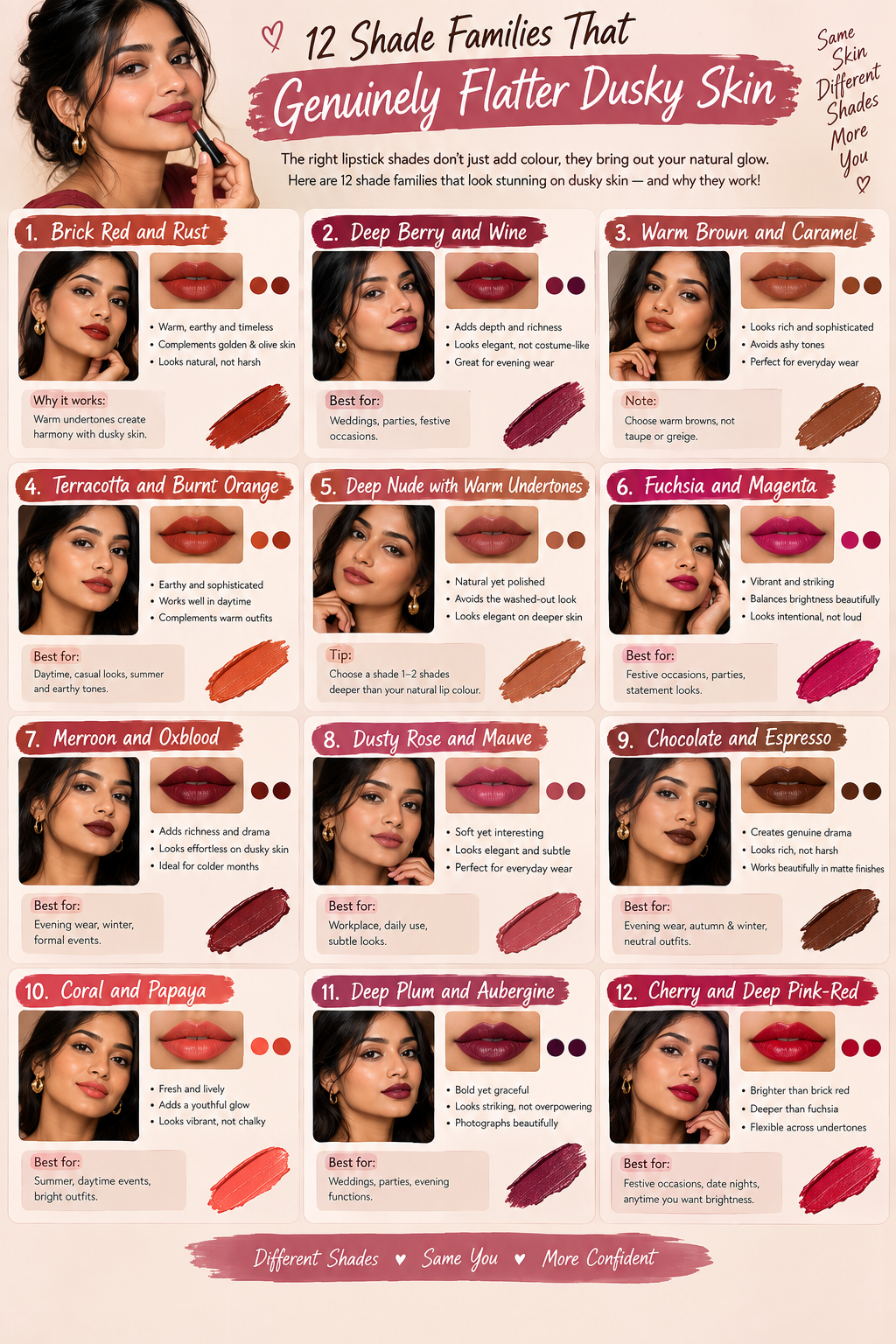
1. Brick Red and Rust
This is probably the single most reliable shade family for dusky skin. Brick red sits between true red and brown, with warm orange-brown undertones that harmonise beautifully with golden and olive skin. Unlike a bright blue-toned red, brick red doesn’t create harsh contrast — it looks like it belongs on the face.
Rust shades work on the same principle but lean further into orange-brown territory. These are particularly good for daytime wear and translate well to both matte and satin finishes.
Why it works: The warm undertone in the shade matches the warmth already present in dusky skin, creating harmony rather than clash.
2. Deep Berry and Wine
If brick red is the daytime staple, deep berry is the evening equivalent. Shades like wine, mulberry, plum, and deep raspberry create striking depth without looking costume-like on dusky skin — which is exactly what tends to happen when lighter complexions attempt these colours.
These shades particularly suit neutral and cool-leaning dusky skin, though warm-toned dusky skin can carry the warmer wine shades (with a hint of red) very well too.
Best for: Evening events, weddings, festive occasions, and anytime you want impact without brightness.
3. Warm Brown and Caramel
Brown lipstick has a complicated reputation, mostly because the wrong brown can look ashy or dull. But the right brown — warm, with red or golden undertones rather than grey ones — is genuinely one of the most flattering everyday shades for dusky skin.
Look for browns described as caramel, chocolate, cocoa, or toffee rather than “taupe” or “greige,” which tend to have grey undertones that flatten dusky complexions.
A practical note: Brown lipsticks that look muddy in the tube often look completely different on deeper skin tones. Swatching on your hand isn’t reliable here — swatch on your lip if you can.
4. Terracotta and Burnt Orange
Terracotta is somewhat underrated and works especially well on warm and olive dusky skin. It’s essentially a muted, earthy orange-brown that reads as sophisticated rather than bright. Burnt orange sits slightly bolder on the same spectrum.
These shades work particularly well in the daytime and complement warm-toned outfits — think mustard, olive green, rust, and earthy tones.
5. Deep Nude with Warm Undertones
Nude lipstick is where most dusky-skinned people have been let down, because mainstream “nude” is usually calibrated for fair skin — resulting in that washed-out, ashy look that’s genuinely unflattering on deeper complexions.
The nude that actually works for dusky skin is significantly deeper than what’s marketed as nude: think caramel-nude, cinnamon, deep peachy-brown, or a brown-toned rose. The rule of thumb is that your nude should be one to two shades deeper than your natural lip colour, not lighter.
6. Fuchsia and Magenta (Yes, Really)
This is the category most people are surprised by. Bright fuchsia and magenta look genuinely striking on dusky skin because the depth of the complexion balances the brightness of the shade. On very fair skin, these shades can look loud; on dusky skin, they look vibrant and deliberate.
These suit cool and neutral undertones particularly well, and they’re excellent for festive occasions or when you want a statement lip without going dark.
7. Maroon and Oxblood
For a deeper, more dramatic option, maroon and oxblood shades add richness that dusky skin carries effortlessly. These work best in matte or velvet finishes and are particularly suited to evening wear or colder months.
8. Dusty Rose and Mauve
Dusty rose sits between pink and brown, with a muted, slightly greyed-down quality that looks surprisingly elegant on dusky skin — provided you pick a deeper version rather than the pale ones commonly marketed. Mauve works on similar principles, leaning slightly purple.
These shades are particularly good if you want something softer than a berry but more interesting than a plain brown. They suit neutral and cool-leaning dusky skin especially well.
Best for: Everyday wear, workplace settings, and looks where you want subtle colour rather than a statement.
9. Chocolate and Espresso
Deeper than standard browns, chocolate and espresso shades create genuine drama without the boldness of a red or berry. On dusky skin, these read as rich and intentional rather than harsh — a combination that’s genuinely hard to achieve on lighter complexions, where very dark browns can look severe.
Look for versions with warm red or golden undertones rather than cool, ashy ones. These work beautifully in matte and velvet finishes.
Best for: Evening wear, autumn and winter months, and pairing with neutral or earthy outfits.
10. Coral and Papaya
Coral gets dismissed too readily for deeper skin tones, usually because the pale, pastel corals genuinely don’t work. But a saturated, deep coral — leaning towards papaya or warm peach-orange — looks vibrant and fresh on warm-toned dusky skin.
The key is depth: if the coral looks light and chalky in the tube, it will almost certainly wash out. Look for versions that are clearly pigmented and lean warm rather than pink.
Best for: Summer, daytime events, and pairing with lighter or brighter outfits.
11. Deep Plum and Aubergine
Plum sits in the same family as berry but leans further purple, and aubergine takes it deeper still. These shades are genuinely striking on dusky skin because the natural depth of the complexion supports the intensity rather than being overwhelmed by it.
They suit cool and neutral undertones best, though warm-toned dusky skin can carry plums that have a red bias. These photograph particularly well, which makes them a solid choice for events.
Best for: Weddings, parties, evening functions, and colder months.
12. Cherry and Deep Pink-Red
Cherry occupies the space between red and pink — brighter than a brick red, deeper than a fuchsia. On dusky skin, cherry shades look lively without tipping into the harshness that blue-toned bright reds sometimes create.
This is a good middle-ground option if you find brick red too muted for evening wear but maroon too heavy. It works across most undertones, making it one of the more flexible picks on this list.
Best for: Festive occasions, date nights, and anytime you want brightness with some depth behind it.
Shades to Approach Carefully
This isn’t a list of shades to avoid entirely — makeup rules are largely personal preference — but these tend to need more careful selection:
Pastel and baby pinks: Very light, chalky pinks can create an unflattering contrast against dusky skin and often read as ashy. If you love pink, opt for deeper rose, dusty pink, or berry-pink rather than pastel.
Peachy nudes made for fair skin: These commonly wash out dusky complexions entirely. The issue isn’t peach itself — it’s the lightness level.
Frosted or heavily shimmery light shades: Frost finishes in light colours tend to emphasise texture and can look dated on any skin tone, but the contrast issue is more noticeable on deeper skin.
Grey-based or “greige” browns: As mentioned earlier, grey undertones tend to flatten and dull warm dusky skin.
Bright orange-corals in very light tones: True coral can work, but very light, pastel-leaning corals often disappear or look chalky.
Matching Finish to Occasion
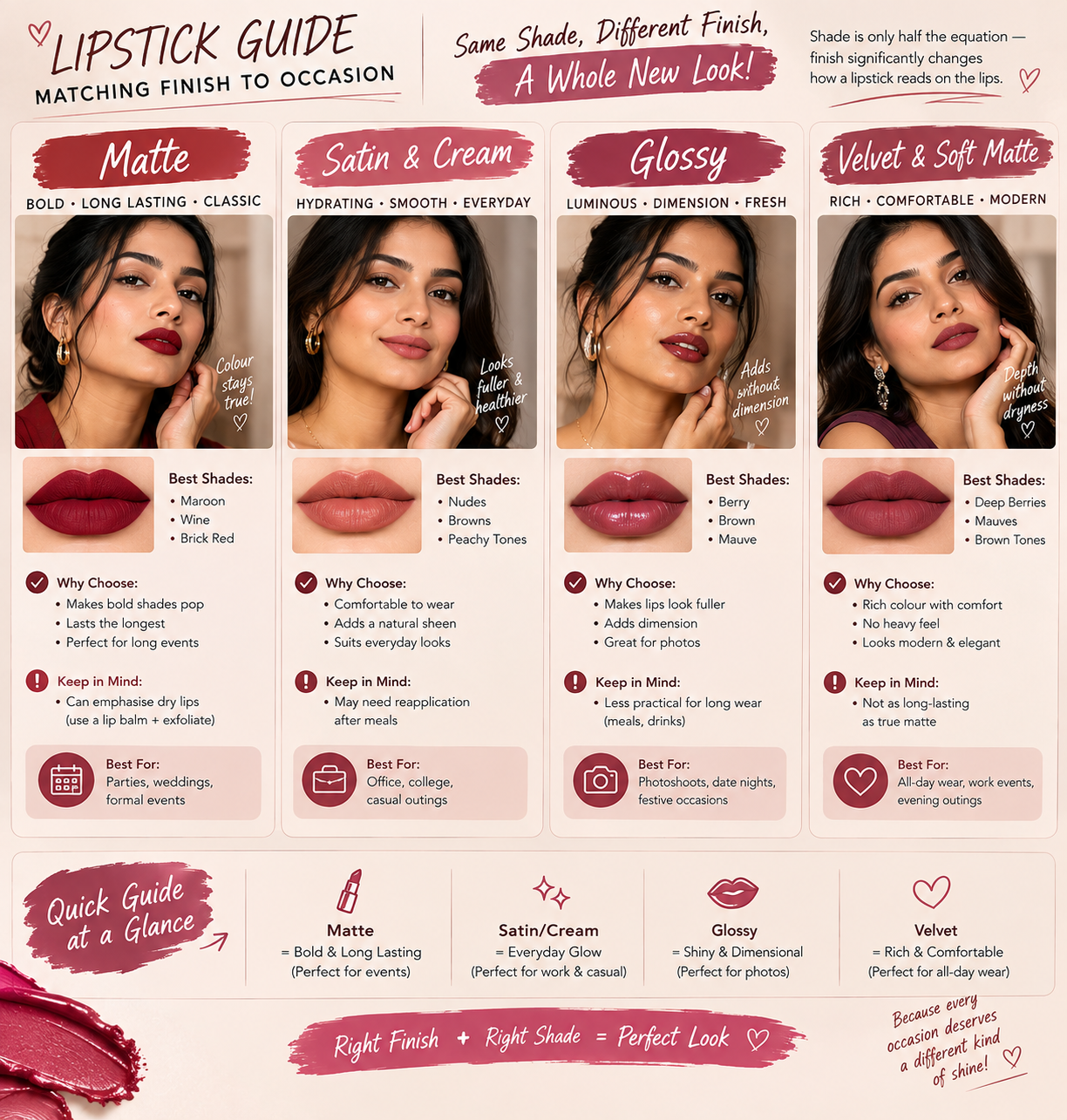
Shade is only half the equation — finish significantly changes how a lipstick reads on the lips.
Matte: Best for deep shades like maroon, wine, and brick red, where you want the colour to be the focus. Matte formulas also tend to last longest, making them practical for long events. The trade-off is that matte can emphasise dry or chapped lips, so exfoliation and a lip balm base become important.
👉 Check Latest Price on Amazon
Satin and cream: The most forgiving finish for everyday wear. Satin adds a slight sheen that makes lips look fuller and healthier without being glossy. This finish suits nudes and browns particularly well.
👉 Check Latest Price on Amazon
Glossy: Works beautifully on dusky skin in berry and brown tones, adding dimension. Less practical for long wear or meals, but excellent for photographs, where gloss catches light.
👉 Check Latest Price on Amazon
Velvet and soft matte: A middle ground that’s become increasingly popular — the depth of matte without the drying feel. Good for deep shades if you find traditional matte uncomfortable.
👉 Check Latest Price on Amazon
Shade Recommendations by Occasion
For everyday office wear: Warm brown, caramel nude, or a muted brick red in a satin finish. These read polished without being attention-grabbing.
For college or casual outings: Terracotta, soft berry, or a tinted lip balm in a deeper rose shade. Lower maintenance, still flattering.
For weddings and festive events: Deep berry, maroon, or a bold fuchsia in matte or velvet. These photograph well and hold up against heavy traditional outfits and jewellery.
For evening parties: Wine, oxblood, or a glossy deep berry. The lower lighting suits deeper, richer shades.
For a no-makeup makeup look: A deep nude one to two shades darker than your natural lip colour, in a satin or balm finish.
Practical Application Tips for Deeper Skin Tones
Prep matters more with dark shades. Deep shades sit unforgivingly on dry or flaky lips. Gently exfoliate once or twice a week and apply a lip balm at least five minutes before your lipstick — long enough to absorb so it doesn’t cause slipping.
Use a lip liner in a matching or slightly deeper shade. This is especially relevant for bold colours, which tend to bleed. A liner also helps deep shades look sharper and more intentional.
Consider a concealer base for lighter shades. If you’re wearing a nude or lighter shade and your natural lip pigmentation is deep (very common with dusky skin), a light layer of concealer on the lips first helps the shade show up accurately rather than mixing with your natural lip tone.
Blot and reapply for longevity. Apply one layer, blot with a tissue, then apply a second thin layer. This makes almost any formula last noticeably longer than a single thick application.
Balance your eye makeup. With a bold lip — fuchsia, maroon, deep berry — keep eye makeup relatively simple. With a nude or brown lip, you have more room for a defined eye.
Common Mistakes People Make
Buying based on how the bullet looks. Lipstick in the tube and lipstick on deeper skin can look remarkably different. Tube colour is one of the least reliable indicators for deeper complexions.
Following shade recommendations meant for other skin depths. A shade that’s described as “the perfect everyday nude” in most beauty content is usually calibrated for fair-to-medium skin. The underlying shade family might work; the depth level often won’t.
Ignoring undertone entirely. Two brick reds can look completely different depending on whether they lean orange or lean blue. Picking the shade family correctly but ignoring undertone is a common reason a “recommended” shade still doesn’t look right.
Assuming bold means unflattering. A lot of people with dusky skin default to browns and nudes out of caution, when brighter and deeper shades often suit them better than anyone else.
📚Related Articles You May Like
Continue building your beauty collection with these GlowifyHub guides:
- Best Lip Balms with SPF
- Best Sunscreens for Acne-Prone Skin
- Best Moisturizers for Oily Skin in India
- Top Beauty Products for College Girls
- Lakme Unreal Glow Primer Review
- Swiss Beauty Mattifying Makeup Primer Review
- MARS Glow O’ Clock Primer Review
- Faces Canada Strobe Cream Review
- Best Hair Mask for Damaged Hair
- How to Get Soft Hair Naturally
FAQs
Which lipstick shade suits dusky skin the most?
Brick red and warm brown are the most universally flattering across dusky skin tones, because their warm undertones harmonise with the natural warmth in the complexion rather than contrasting against it.
Can dusky skin wear nude lipstick?
Yes, but the shade needs to be significantly deeper than mainstream nudes. Look for caramel, cinnamon, or brown-toned rose shades that are one to two shades deeper than your natural lip colour.
Is red lipstick good for dusky skin?
Very much so, but the type of red matters. Brick red, warm red, and deep red with orange or brown undertones tend to flatter dusky skin more than bright blue-toned reds, though cool-toned dusky skin can carry blue-reds well.
Which lipstick shades should dusky skin avoid?
Pastel pinks, very light peachy nudes, and grey-based browns tend to be the least flattering, as they often look ashy or washed out against deeper complexions.
Does matte or glossy suit dusky skin better?
Both work — it depends on the shade and occasion. Matte suits deep shades like maroon and wine, while satin and gloss work particularly well for browns, nudes, and berries.
How do I stop my natural lip pigmentation from changing the lipstick shade?
Apply a thin layer of concealer or lip primer on the lips before your lipstick, particularly for lighter or nude shades. This creates a neutral base so the actual shade shows accurately.
Final Thoughts
The most useful shift in thinking here is moving away from the idea that dusky skin has fewer options. It genuinely has more — the depth of the complexion supports both bold, saturated colours and rich, deep shades that lighter skin tones often struggle to carry.
Start with your undertone, pick a shade family that matches it, and adjust the depth so the colour reads clearly against your skin rather than disappearing into it. Once those three things line up, almost any colour becomes wearable.