

Finding the best sunscreen for oily skin isn’t easy, because most formulas feel heavy on skin that’s already shiny. If you have oily skin, you probably know the struggle😩
Most sunscreens:
- Feel greasy
- Make face sweaty
- Cause acne breakouts
- Leave white cast
- Make skin look oily after few hours
Because of this, many people skip sunscreen completely ❌
But skipping sunscreen can lead to:
- Tanning
- Dark spots
- Acne marks
- Premature aging
- Uneven skin tone
The good news? ✨
Today, many lightweight and oil-free sunscreens are specially made for oily skin.
A good sunscreen for oily skin should:
✔ Feel lightweight
✔ Control excess oil
✔ Give matte finish
✔ Protect from UV rays
✔ Not clog pores
In this GlowifyHub review guide, we’ll explore the best sunscreen for oily skin available in India, along with honest reviews, pros & cons, and tips to choose the right one 💛
What is Sunscreen & Why is it Important? ☀️
Sunscreen protects skin from harmful UV rays.
It helps prevent:
- Sun tan
- Skin damage
- Pigmentation
- Premature aging
- Dark spots
For oily skin, choosing the right sunscreen is important because heavy formulas may clog pores and trigger breakouts.
Benefits of Using Sunscreen for Oily Skin ✨
☀️ 1. Prevents Tanning
Protects skin from harsh sun exposure.
💧 2. Controls Excess Oil
Oil-free sunscreens reduce greasy look.
🌿 3. Helps Prevent Acne Marks
Sun protection helps reduce dark spot worsening.
✨ 4. Gives Matte Finish
Modern sunscreens feel lightweight and fresh.
🛡️ 5. Protects Skin Barrier
Daily sunscreen supports healthy skin.
Best Sunscreens for Oily Skin in India 💰
1. Aqualogica Glow+ Dewy Sunscreen SPF 50

Best For
Daily lightweight protection
Pros
✔ Lightweight texture
✔ No white cast
✔ Easy blending
Cons
✖ Dewy finish may feel shiny for extra oily skin
Honest Review
This one leans dewy, so it suits normal, combination, and mildly oily skin better than very oily skin. It’s lightweight, blends easily, and users generally report no white cast, which is why it’s popular for everyday wear. If your face turns shiny by noon, expect the dewy finish to show up as extra shine in the T-zone, and blot or set it with a light powder. For very oily skin, think of it as a glow-forward daytime option, not a matte one.
2. Minimalist Invisible Sunscreen SPF 50

Best For
Matte finish lovers
Pros
✔ Invisible finish
✔ Non-greasy texture
✔ Good for oily skin
Cons
✖ Slightly premium pricing
Honest Review
Minimalist positions this around an invisible, non-greasy finish, which is exactly what oily skin tends to want. It’s often recommended for oily and acne-prone skin, and the matte-leaning feel helps limit midday shine. The trade-off is price, which sits above many drugstore options. If you want one dependable daily pick for oily skin, this is a strong candidate. Check the exact SPF and PA rating on the Amazon listing.
3. Dot & Key Watermelon Cooling Sunscreen

Best For
Hydrated glow finish
Pros
✔ Cooling feel
✔ Lightweight formula
✔ Refreshing texture
Cons
✖ Very oily skin may prefer matte sunscreen
Honest Review
The cooling, refreshing feel is the main draw, especially in hot weather, and the formula is lightweight. It works best for normal to combination skin, or oily skin that doesn’t mind a fresh, hydrated finish. Very oily skin may prefer a matte sunscreen, and heavy sweaters should plan on reapplying.
4. La Shield Sunscreen Gel SPF 40

Best For
Acne-prone oily skin
Pros
✔ Gel-based formula
✔ Matte finish
✔ Sweat-resistant
Cons
✖ Texture may feel silicone-heavy for some users
Honest Review
The gel base and matte finish make it a natural fit for oily and acne-prone skin, and the sweat-resistant positioning helps in humid weather. The common complaint is a silicone-heavy slip, which some people like under makeup and others find too slick. If you’re sensitive to silicones or prefer a bare-skin feel, patch test it first.
5. Neutrogena Ultra Sheer Dry Touch Sunscreen
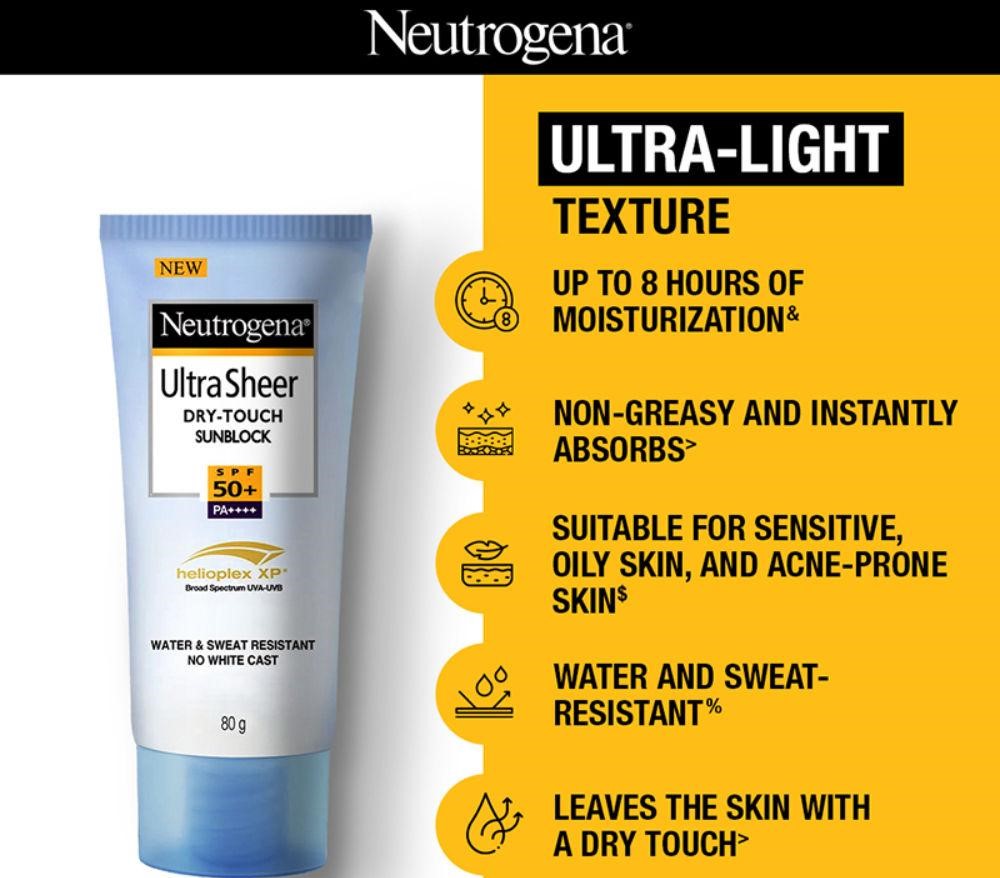
Best For
Outdoor sun protection
Pros
✔ Strong SPF protection
✔ Lightweight feel
✔ Easily available
Cons
✖ May sting sensitive eyes
Honest Review
Known for a light, dry-touch finish, this is a widely available, familiar option for daily and outdoor use. It tends to suit oily skin because it doesn’t feel heavy or sticky. Some users find chemical-filter sunscreens sting around the eyes when they sweat, so apply carefully near the eye area and keep it off your eyelids.
How to Apply Sunscreen Correctly 🧴
Step-by-Step Guide
Step 1: Cleanse Face
Wash face gently before sunscreen.
Step 2: Apply Moisturizer
Optional if sunscreen already hydrating.
Step 3: Use Enough Quantity
Apply 2-finger amount for face & neck.
Step 4: Blend Properly
Spread evenly across skin.
Step 5: Reapply Every 2–3 Hours
Especially during outdoor activities.
Who Should Use Oil-Free Sunscreen? 👀
✔ Oily skin users
✔ Acne-prone skin
✔ College students
✔ Office-going people
✔ Daily outdoor exposure
👉 Sunscreen is important for all skin tones and genders.
Common Sunscreen Mistakes to Avoid ❌
- Applying too little sunscreen
- Skipping reapplication
- Using sunscreen only outdoors
- Choosing heavy greasy formulas
- Not checking SPF level
Comparison: Which Sunscreen is Best? ⚡
| Sunscreen | Best For | Finish | Skin Type |
|---|---|---|---|
| Aqualogica Glow+ | Daily use | Dewy | Combination skin |
| Minimalist Invisible | Matte look | Matte | Oily skin |
| Dot & Key Watermelon | Hydration | Fresh glow | Normal skin |
| La Shield Gel | Acne-prone skin | Matte | Oily/acne skin |
| Neutrogena Ultra Sheer | Outdoor use | Dry-touch | All skin types |
👉 Best Overall: Minimalist Invisible Sunscreen
👉 Best Budget Pick: Aqualogica Glow+ Sunscreen
👉 Best for Acne-Prone Skin: La Shield Gel Sunscreen
Tips for Oily Skin in Summer ☀️
- Use gel-based skincare
- Avoid heavy creams
- Wash face twice daily
- Carry blotting paper
- Stay hydrated 💧
- Reapply sunscreen properly
- Avoid touching face repeatedly
How to Choose the Best Sunscreen for Oily Skin
Choosing well matters more with oily skin, because a mismatched formula shows up quickly as shine, clogged pores, or a face you keep wanting to wash.
Texture: Gels, fluids, and lightweight lotions generally sit better on oily skin than thick creams. If a sunscreen feels heavy when you rub it between your fingers, it will probably feel heavier on your face by afternoon.
Finish: Matte or dry-touch finishes control shine, while dewy finishes add glow. If your skin gets very oily, a dewy sunscreen will likely read as extra shine.
Labels: “Oil-free” and “non-comedogenic” are useful hints, but they aren’t guarantees, since skin reacts differently from person to person. Treat them as a starting point and patch test.
Protection level: Look for broad-spectrum protection, with SPF 30 to 50 and a PA rating of PA+++ or higher, so you’re covered against both UVB and UVA.
Ingredients: If you break out easily, be cautious with very rich oils or butters. Fragrance can also irritate acne-prone skin.
Give it time: Use a new sunscreen consistently for a week or two before judging it. A single hot, humid day isn’t a fair test.
Chemical vs Mineral Sunscreen for Oily Skin
Mineral sunscreens use ingredients like zinc oxide or titanium dioxide, which sit on top of the skin. They can feel naturally matte, but some leave a white or grey cast and feel thicker.
Chemical sunscreens use filters that absorb into the skin, which usually allows lighter, more invisible textures. A few people find them irritating, and some feel a sting around the eyes when they sweat.
Neither type is automatically better for oily skin. What matters is whether the formula feels comfortable enough that you’ll actually wear it every day and reapply. Formulations vary a lot within each category, so choose by how it feels on your skin, not only by the label.
Reapplying Sunscreen Over Oily Skin and Makeup
Reapplication is where oily-skin routines fall apart, because adding more liquid sunscreen on top of shiny skin or makeup feels unappealing.
Blot first with a tissue or blotting paper to lift excess oil. Then use a reapplication-friendly format, such as a sunscreen powder, stick, or mist, which goes over makeup without smudging it. Avoid layering thick liquid sunscreen repeatedly over makeup, since it can turn patchy.
As a rule, reapply every 2 to 3 hours of direct sun exposure, and sooner after heavy sweating. If you’re mostly indoors, a morning application plus one midday top-up for exposed areas is usually realistic.
Common Myths About Sunscreen and Oily Skin
“Oily skin doesn’t need sunscreen.” Oil on the surface doesn’t block UV rays. Oily skin tans, burns, and pigments just like any other skin.
“The SPF in my foundation is enough.” Most people apply foundation far too thinly to get the labeled SPF, so it works as a bonus, not a replacement.
“I’m indoors all day, so I’m fine.” UVA rays pass through glass, which is why window seats and car commutes still add exposure over time.
“Darker skin tones don’t need sunscreen.” All skin tones can tan and develop pigmentation, and acne marks tend to darken with sun exposure.
“A higher SPF means I can reapply less.” Reapplication matters regardless of the number, because sunscreen wears off through sweat, rubbing, and time.
If Sunscreen Seems to Cause Breakouts
It’s easy to blame sunscreen when pimples appear, but it isn’t always the cause. Check a few things first.
Make sure you’re removing it properly at night, especially water-resistant formulas, which may need a double cleanse. Look at what else is on your skin, since a heavy moisturizer under sunscreen can contribute. Try testing the sunscreen on a small area, like the jawline, for a week before using it all over.
If it still seems to trigger breakouts, switch to a different texture or filter type, such as a gel or a mineral formula. If breakouts are persistent or painful, a dermatologist can help work out whether sunscreen, skincare, or something else is behind them.
Best Sunscreen for Oily Skin: A Quick Buying Checklist
Before you pick the best sunscreen for oily skin, run it through this short checklist. It takes a minute and saves you from buying a formula that feels heavy by lunchtime.
Check the texture first. The best sunscreen for oily skin is usually a gel, fluid, or lightweight lotion. If the product feels thick or waxy when you rub it between your fingers, it will likely feel heavier on your face.
Match the finish to your skin. Very oily skin generally does better with matte or dry-touch finishes, while a dewy finish suits normal to combination skin. Be honest about how shiny your face gets by afternoon.
Confirm the protection. Look for broad-spectrum protection with SPF 30 to 50 and PA+++ or higher, so you’re covered against both UVB and UVA rays.
Think about reapplication. A sunscreen only protects you if you actually reapply it. If a formula feels too sticky to top up during the day, you’ll probably end up skipping it.
Test before committing. Use it for a week or so before judging it. If you’re acne-prone, try it on a small area like the jawline first.
Check the fine print. Fragrance, heavy oils, and alcohol-heavy formulas bother some people more than others, so read the ingredient list if you’ve reacted to products before.
If you’re still unsure, start with a matte, gel-based pick from the list above, and switch to a dewy one only if your skin feels tight. Remember that the best sunscreen for oily skin is the one that protects you, feels comfortable, and fits easily into your daily routine.
🔗 Related Articles You May Like
Continue your body-care and skincare journey with these GlowifyHub guides:
- Dove Glow Recharge Serum Body Wash Review
- Best Moisturizer for Oily Skin in India
- Best Moisturizer for Dry Skin Under ₹499
- How to Remove Tan Naturally at Home
- Best Sunscreens for Acne-Prone Skin in India
- Best Face Serum for Acne-Prone Skin
- Night Skincare Routine for Clear Skin
- Top Korean Skincare Products in India
- Best Hair Oil for Hair Growth Fast
- Best Hair Mask for Damaged Hair
FAQs (SEO Optimized)
Q1. Which is the best sunscreen for oily skin in India?
Minimalist Invisible, La Shield Gel, and Neutrogena Dry-Touch are popular matte or dry-touch options, while Aqualogica and Dot & Key suit combination skin better.
Q2. Can sunscreen cause acne on oily skin?
Heavy or pore-clogging formulas may trigger breakouts for some people, which is why lightweight, non-comedogenic options and patch testing help.
Q3. Is matte sunscreen good for oily skin?
Yes, matte and dry-touch sunscreens help control a greasy appearance.
Q4. How often should sunscreen be reapplied?
Every 2 to 3 hours during direct sun exposure, and sooner after heavy sweating.
Q5. Which SPF is best for oily skin?
SPF 30 to 50 with broad-spectrum protection works well for daily use.
Q6. Do I need moisturizer under sunscreen if my skin is oily?
Oily skin still needs hydration, but a lightweight gel moisturizer is usually enough, and some people skip it if their sunscreen is hydrating.
Q7. Is gel sunscreen better than cream for oily skin?
Gels and fluids are generally lighter and feel less greasy, so many people with oily skin prefer them.
Q8. Can I use a dewy sunscreen on oily skin?
You can, but it will likely look shiny, so mildly oily skin handles it better than very oily skin.
Q9. Does oily skin still need sunscreen indoors?
Yes, since UVA passes through windows, daily protection still matters.
Q10. Is mineral sunscreen better for acne-prone skin?
Some acne-prone people prefer it, but formulations vary, so choose by how a specific product feels on your skin.
Q11. How much sunscreen should I use on my face?
About two finger-lengths for face and neck is a common guideline.
Q12. How do I stop sunscreen from making my face greasy?
Choose a gel or matte formula, apply a thin even layer, and blot or set lightly with powder if needed.
Q13. Can I wear sunscreen under makeup?
Yes, apply sunscreen first, let it settle for a few minutes, then apply makeup.
Q14. How do I remove sunscreen at night?
A gentle cleanser is usually enough, and water-resistant formulas may need a double cleanse.
Q15. Does sunscreen help with acne marks?
It helps prevent acne marks from darkening with sun exposure, but it doesn’t remove existing marks on its own.
Q16. Are expensive sunscreens better for oily skin?
Not necessarily. Texture, finish, and whether you’ll wear it daily matter more than price.
Q17. Can men use these sunscreens?
Yes, none of these are gender-specific.
Q18. Does sunscreen expire?
Yes, check the date on the pack, and avoid using it if the texture or smell changes.
Q19. Can I use sunscreen powder instead of liquid?
Powders work well for touch-ups over makeup, but they usually shouldn’t replace a properly applied liquid sunscreen in the morning.
Q20. Is it worth buying a sunscreen made for oily skin?
If regular sunscreens feel greasy or make you skip them, a formula made for oily skin makes daily use far easier to stick to.
Conclusion
Finding the best sunscreen for oily skin can completely change your skincare routine ✨
The right sunscreen helps:
✔ Protect skin
✔ Prevent tanning
✔ Control oil
✔ Reduce acne marks
✔ Keep skin healthy
Choose lightweight, non-greasy, and oil-free formulas that suit your skin type 💛
Daily sunscreen is one of the most important steps for healthy glowing skin 🌿
👉 Choose the right product & start your glow journey today ✨