
🌞 Introduction
Protecting your skin from the harsh Indian summer sun is just as important as following a good skincare routine. Prolonged exposure to UV rays can lead to tanning, sunburn, pigmentation, premature ageing, and dull-looking skin. Whether you’re travelling to work, attending college, or spending time outdoors, using a reliable sunscreen every day is one of the simplest ways to keep your skin healthy and protected.
However, choosing the right sunscreen isn’t always easy. With hundreds of options available, finding a formula that suits your skin type, feels comfortable in hot and humid weather, and provides effective sun protection can be confusing. Some sunscreens leave a noticeable white cast, while others may feel greasy or heavy, especially during the summer months.
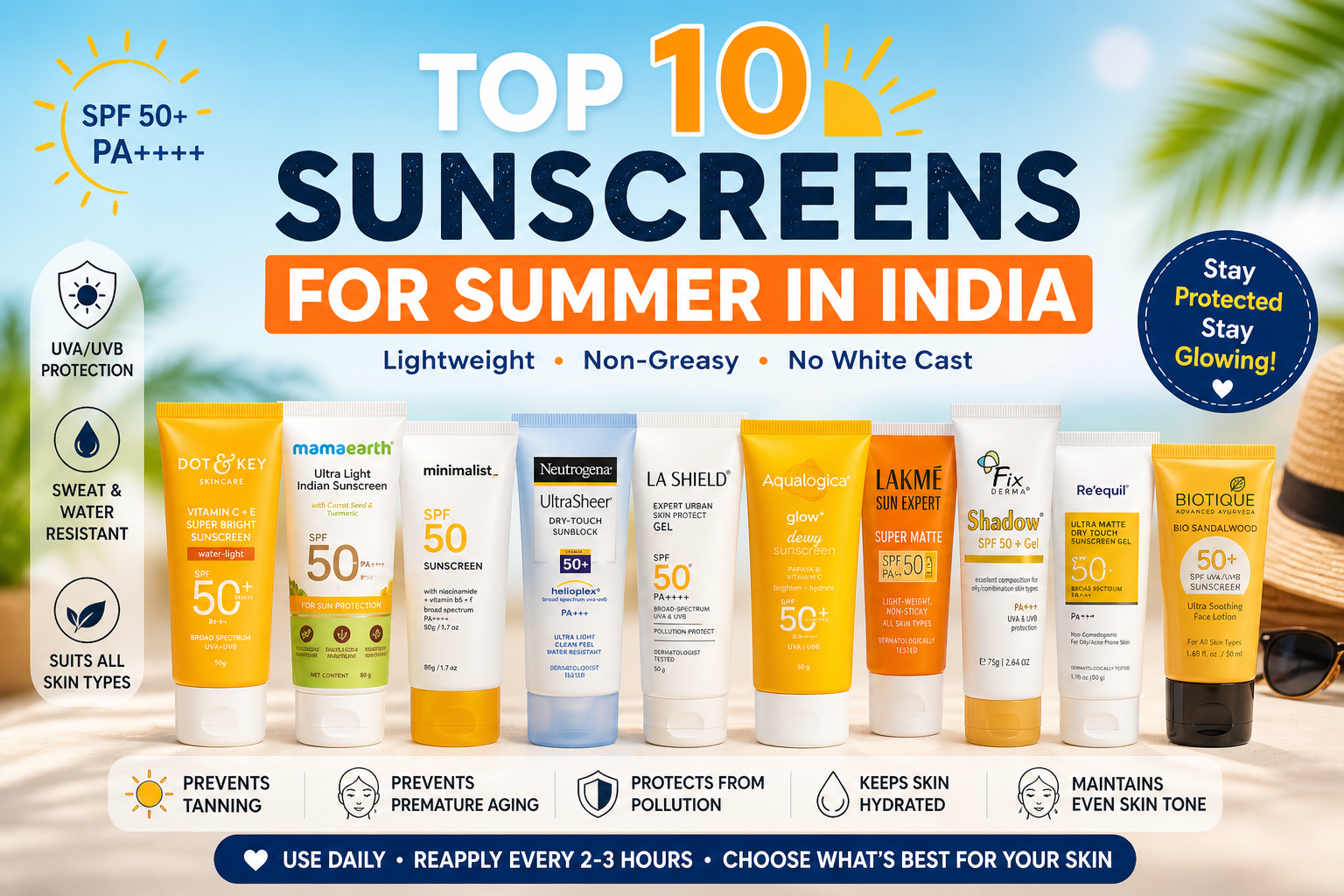
To make your decision easier, we’ve carefully selected the Top 10 Sunscreens for Summer in India based on their SPF protection, PA rating, texture, skin compatibility, ingredients, user experience, and overall value. Whether you have oily, dry, combination, acne-prone, or sensitive skin, this guide will help you choose a sunscreen that fits your daily skincare routine.
In this detailed GlowifyHub guide, you’ll also learn how to choose the right sunscreen, understand SPF and PA ratings, apply sunscreen correctly, and avoid common mistakes so you can get the best possible protection throughout the summer season.
Indian summers are no joke 😓 — harsh sun, tanning, oily skin, and sudden breakouts can ruin your glow within days.
If you’ve ever stepped out without sunscreen and regretted it later, you already know how important it is.
But here’s the problem:
Not every sunscreen suits Indian skin or weather. Some feel greasy, leave a white cast, or melt away in sweat.
Don’t worry — GlowifyHub has done the hard work for you 💛
In this guide, we’ll explore the Top 10 sunscreens for summer in India that actually work — lightweight, non-sticky, and perfect for daily use.
What is Sunscreen & Why It’s Important?
Sunscreen is a skincare essential that protects your skin from harmful UV rays (UVA + UVB).
Without sunscreen, you risk:
- Sunburn ☀️
- Premature aging (wrinkles, fine lines)
- Pigmentation & tanning
- Increased risk of skin damage
👉 In short: No sunscreen = no skincare routine is complete
Benefits of Using Sunscreen Daily
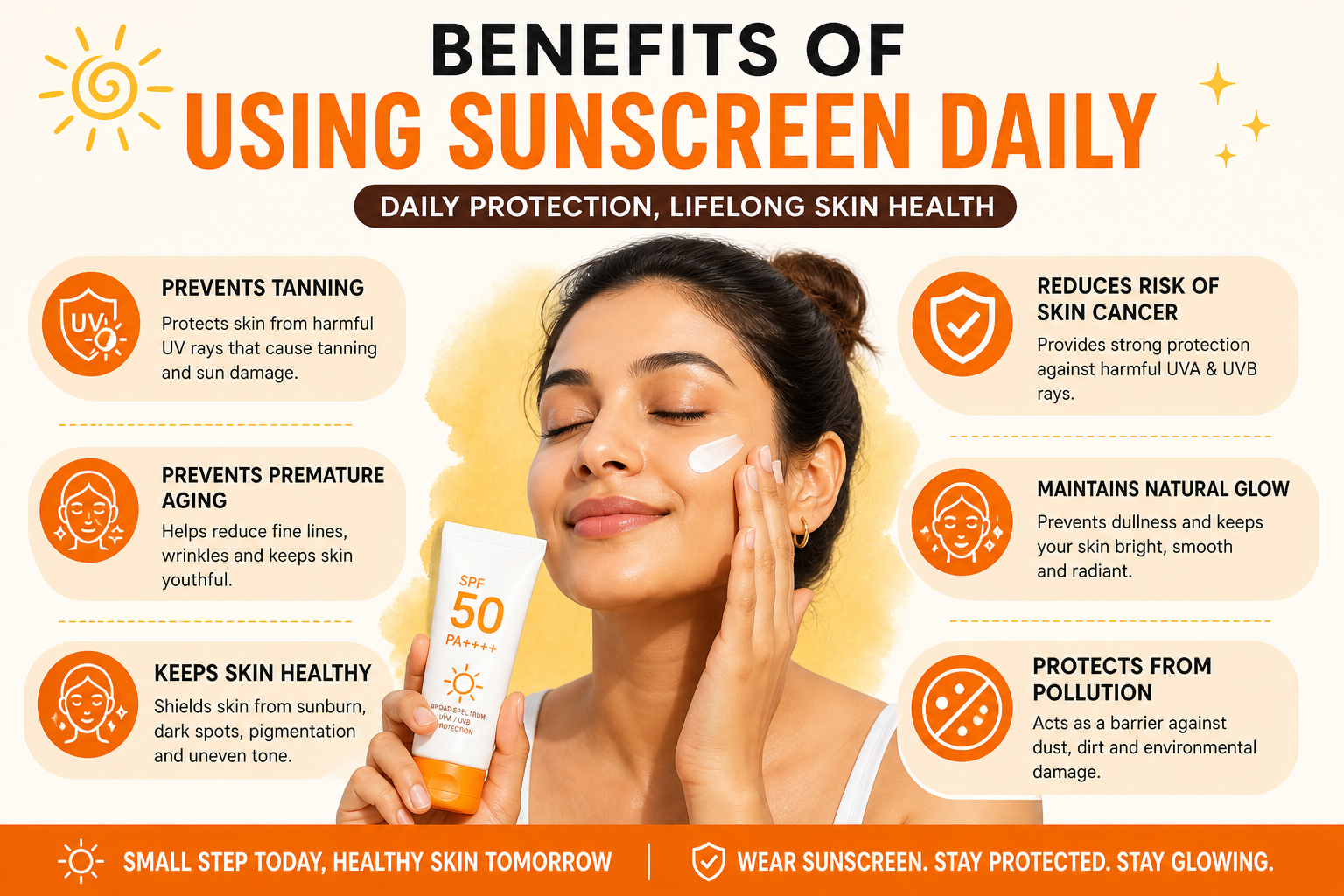
🌞 1. Prevents Tanning & Pigmentation
Protects your skin from harsh Indian sun and keeps tone even.
🧴 2. Anti-Aging Protection
Reduces early wrinkles and sun spots.
💧 3. Maintains Skin Health
Prevents dryness, dullness, and damage.
✨ 4. Enhances Glow
Healthy protected skin always looks brighter.
🛡️ 5. Shields from Pollution + UV Damage
Acts as a protective layer against environmental stress.
Top 10 Sunscreens for Summer in India 💰
1. Dot & Key Watermelon Cooling Sunscreen SPF 50
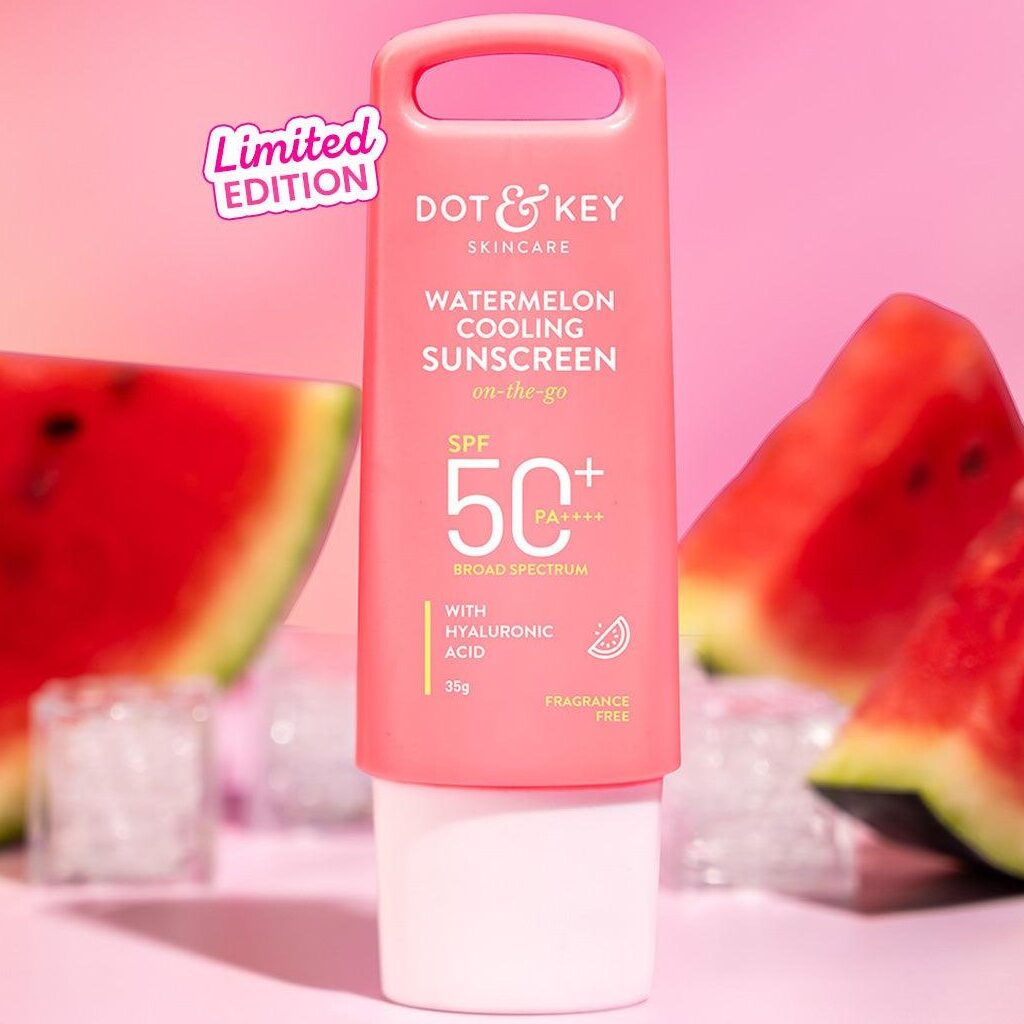
Best for: Oily & combination skin
Pros:
✔ Lightweight gel formula
✔ No white cast
✔ Cooling effect (perfect for summer)
Cons:
✖ Slight fragrance
Honest review
Apply karte hi cooling sensation hoti hai, no white cast. SPF 50, 3-4 ghante mein reapply zaroori hai. Halka watermelon scent hai.
2. Minimalist SPF 50 PA++++ Sunscreen
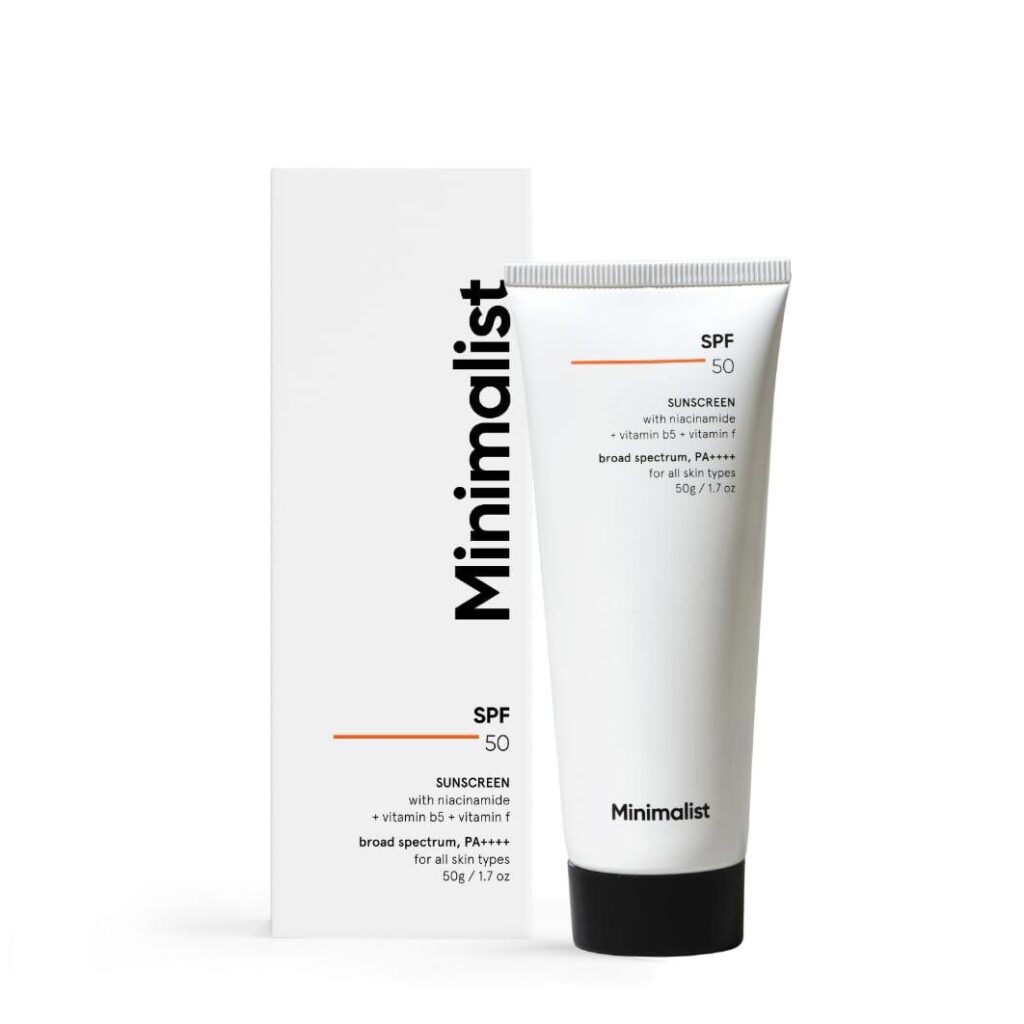
Best for: Sensitive skin
Pros:
✔ Fragrance-free
✔ Dermatologically tested
✔ Strong UV protection
Cons:
✖ Slightly thick texture
Honest review
Fragrance-free formula hai, isliye sensitive skin ke liye trusted choice hai. Texture thoda thick hai Dot & Key se, isliye oily skin walon ko halka haath se use karna chahiye. Strong UV protection ke liye ye consistently top-rated rehta hai.
3. Mamaearth Ultra Light Indian Sunscreen SPF 50
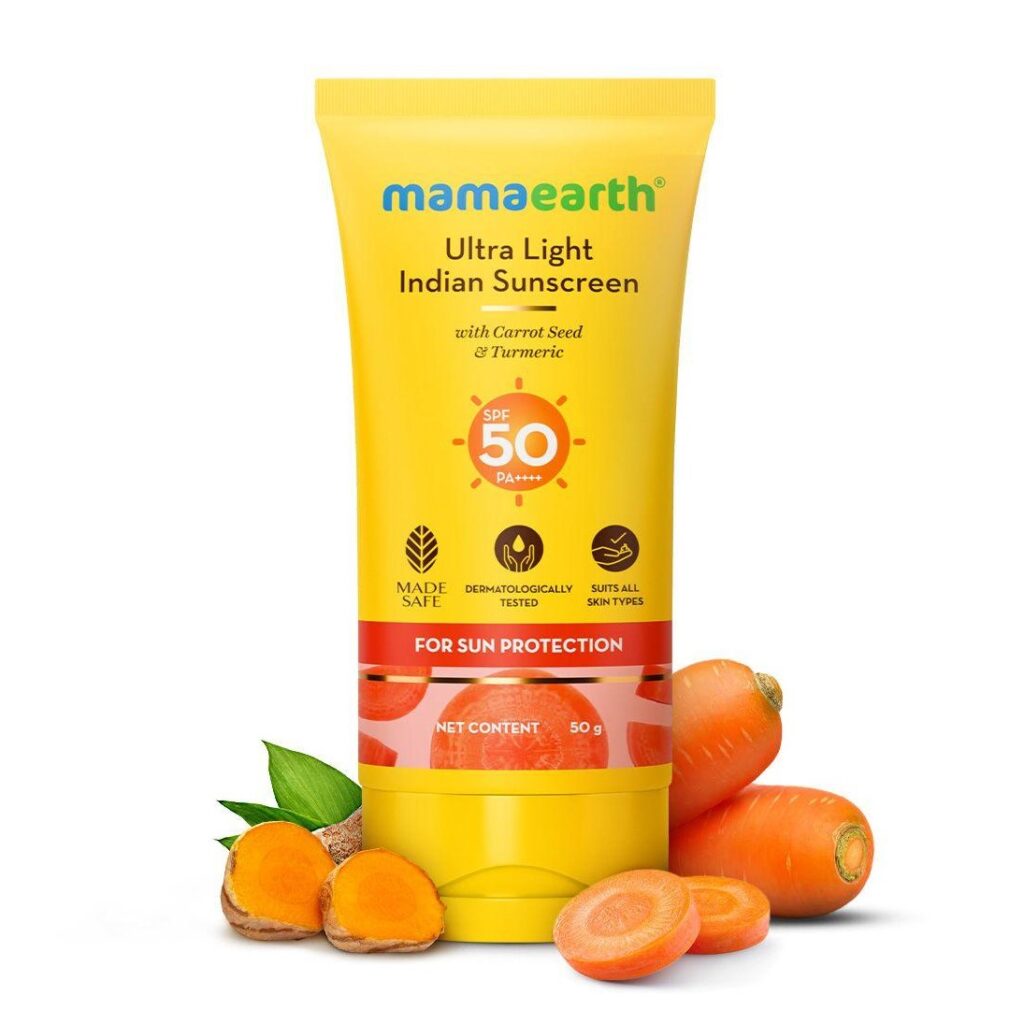
Best for: Budget users
Pros:
✔ Affordable
✔ Lightweight
✔ No harmful chemicals
Cons:
✖ Not very sweat-proof
Honest review
Sabse budget-friendly option hai in sabme. Lightweight hai lekin sweat-resistance average hai — agar aap gym jaate hain ya bahut sweat karte hain, to 2 ghante mein hi reapply karna padega, brand claim se jaldi.
4. Neutrogena Ultra Sheer Dry-Touch Sunscreen
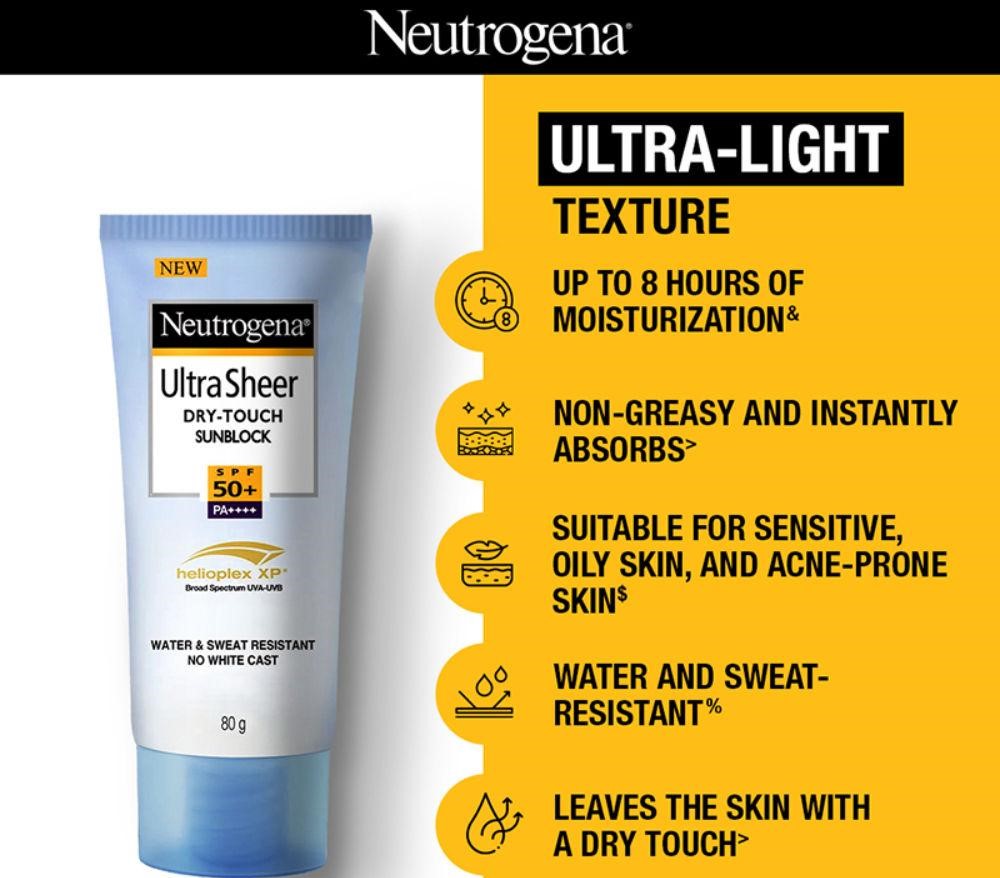
Best for: Outdoor use
Pros:
✔ Sweat-resistant
✔ Matte finish
✔ High SPF protection
Cons:
✖ Can feel slightly drying
Honest review
International brand hai, matte finish deta hai jo outdoor activities ke liye achha hai. Kuch logon ko thoda drying lag sakta hai, isliye dry skin walon ko niche moisturizer zaroor lagana chahiye.
5. La Shield SPF 50 Gel Sunscreen
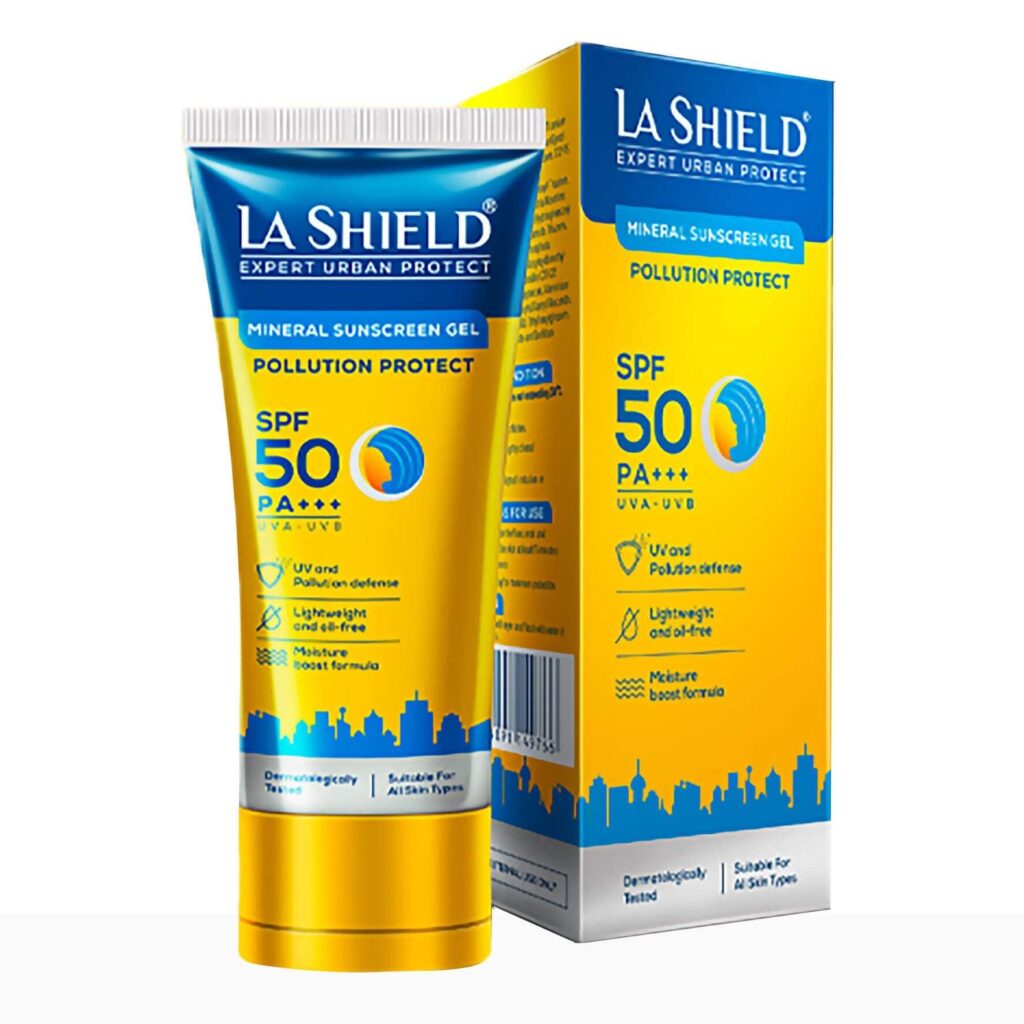
Best for: Acne-prone skin
Pros:
✔ Oil-free
✔ Non-comedogenic
✔ Dermatologist recommended
Cons:
✖ Premium price
Honest review
Acne-prone skin ke liye specifically formulate kiya gaya hai — non-comedogenic hai, pores clog nahi karta. Price thoda premium hai, lekin agar aapko breakouts ki tension hai to worth try karna hai.
6. Aqualogica Glow+ Dewy Sunscreen
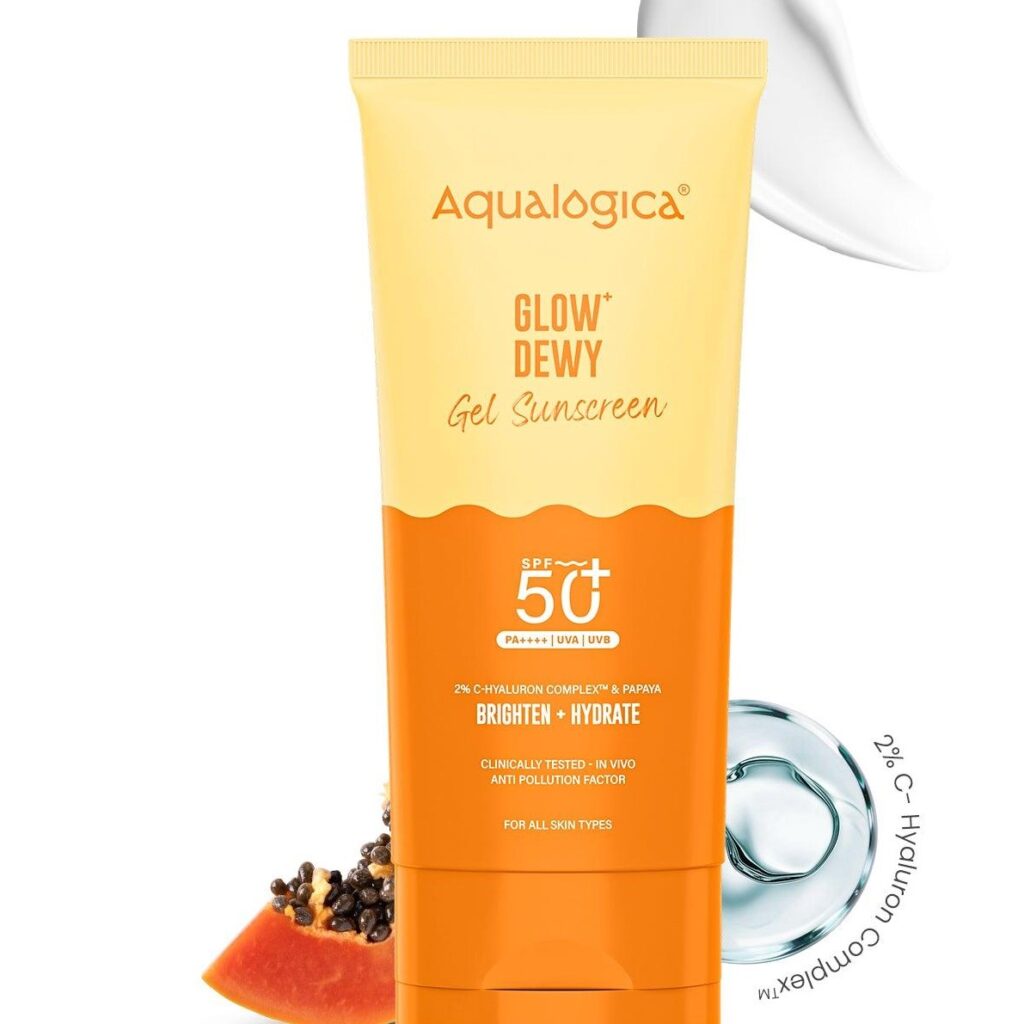
Best for: Dry skin
✔ Hydrating formula
✔ Gives dewy finish
✖ Slight stickiness
Honest review
Dewy finish deta hai jo matte sunscreens se alag hai. Already oily skin walon ko dopahar tak extra shine ho sakti hai.
7. Lakme Sun Expert SPF 50
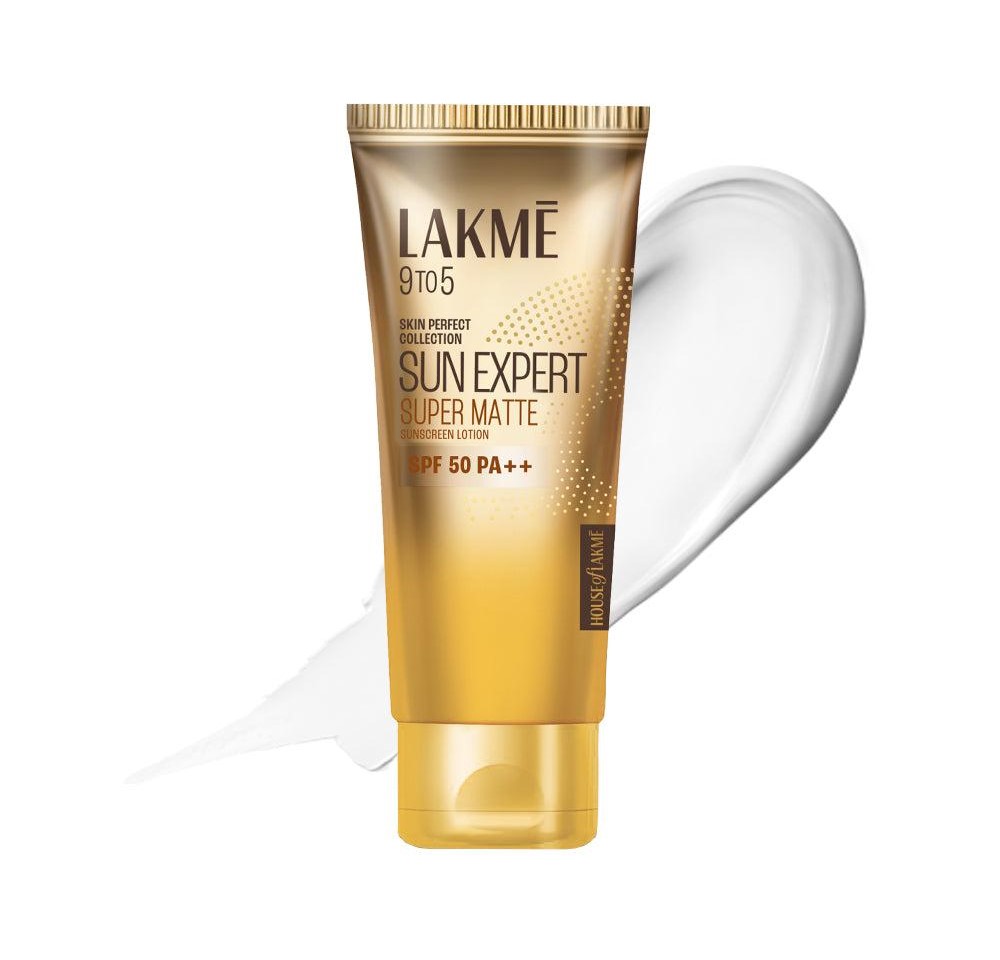
Best for: Daily office use
✔ Easily available
✔ Budget-friendly
✖ May leave slight white cast
Honest review
Har local store mein available hai, isliye convenience ke liye achha hai. White cast halka noticeable ho sakta hai darker skin tones pe.
8. Fixderma Shadow Sunscreen
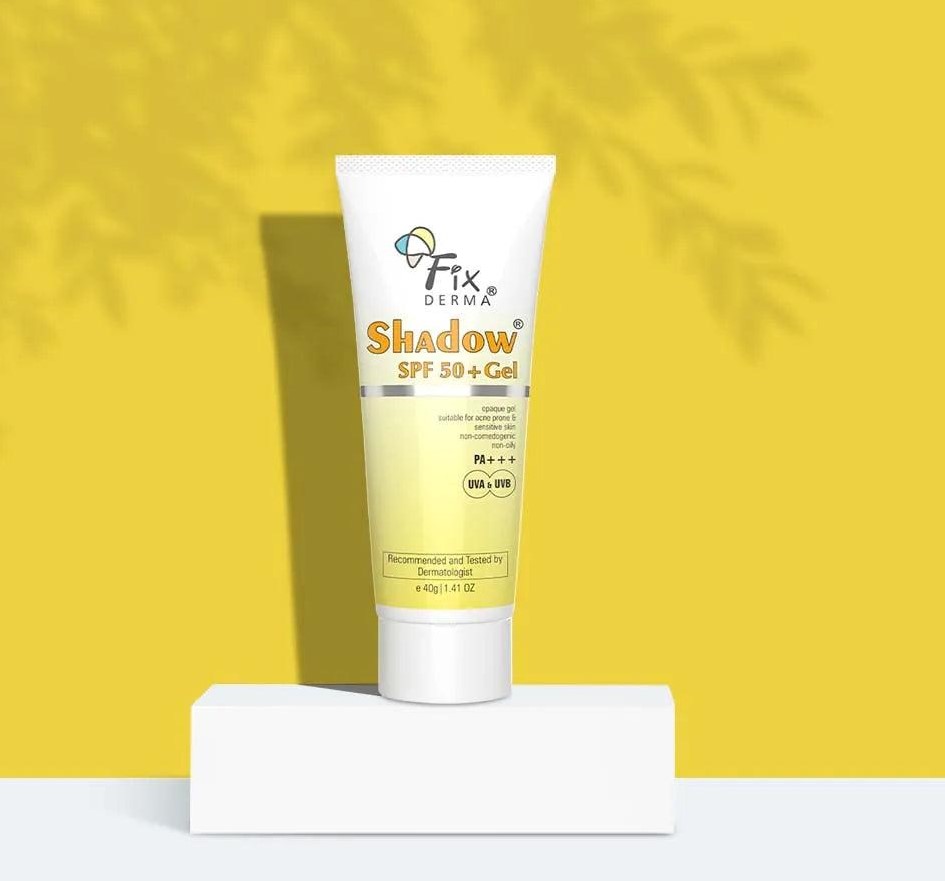
Best for: Sensitive skin
✔ Lightweight gel
✔ No irritation
✖ Less matte finish
Honest review
Dermatologist-recommended brand hai, gentle formula hai jo irritation rarely karta hai. Matte finish nahi deta, isliye agar aap purely oil-control chahte hain to ye first choice nahi hoga.
9. Re’equil Ultra Matte Sunscreen
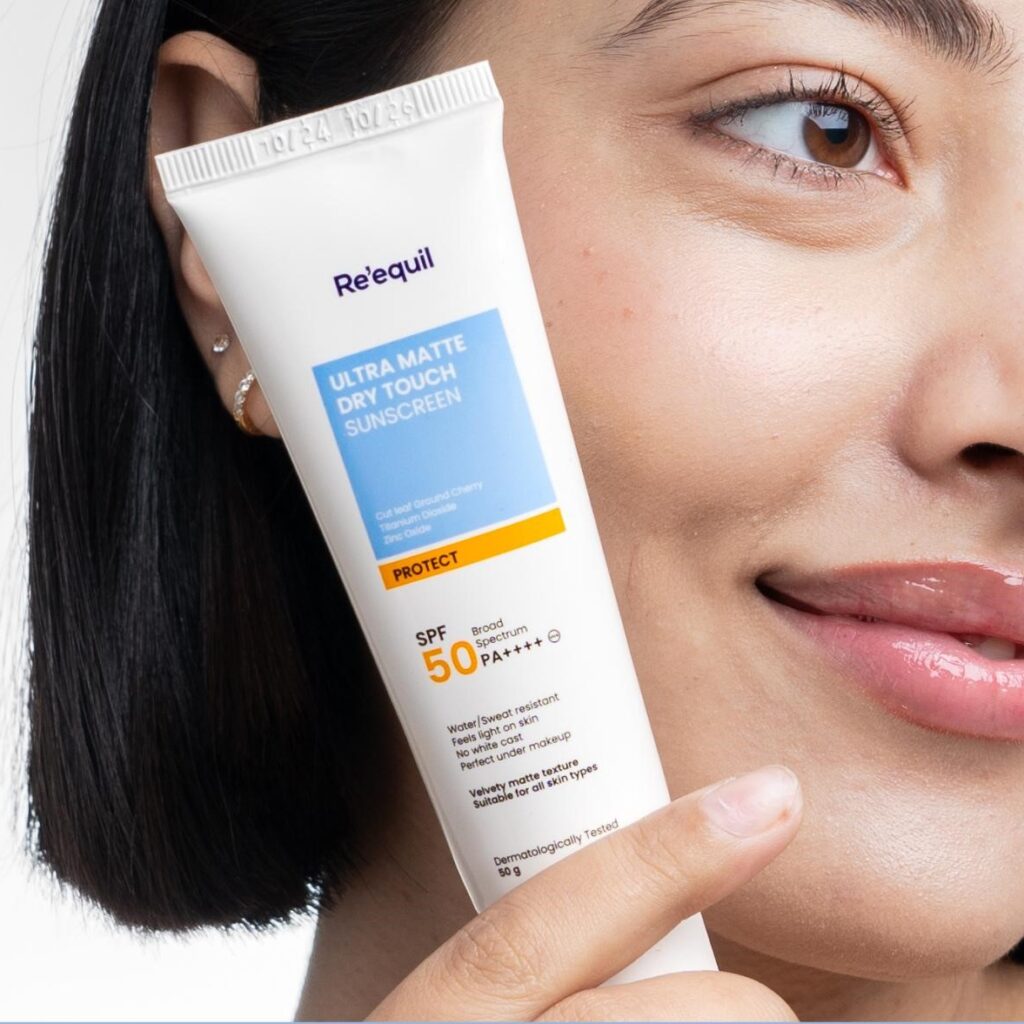
Best for: Oily skin
✔ Matte finish
✔ Sweat-resistant
✖ Slight silicone feel
Honest review
Strong matte finish ke liye popular hai, lekin kuch logon ko silicone-based formula ka halka “cast” feel hota hai skin pe, especially agar zyada quantity laga li.
10. Biotique Bio Sandalwood Sunscreen
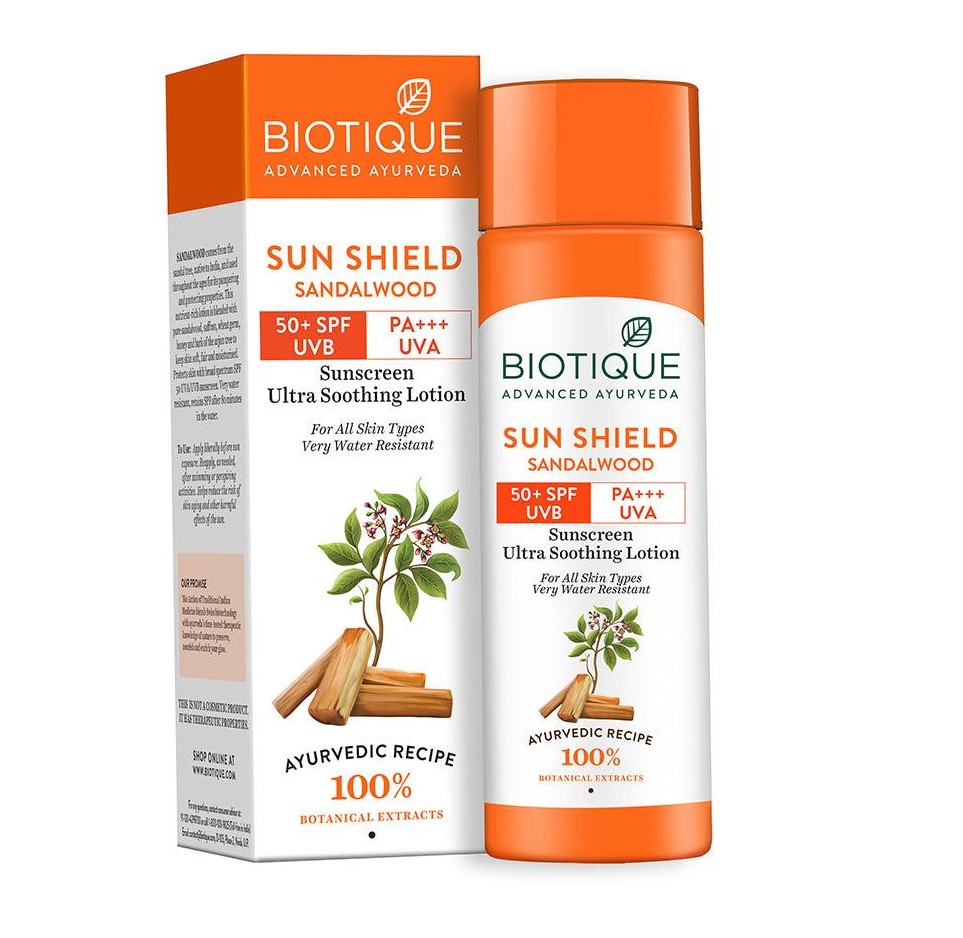
Best for: Natural lovers
✔ Herbal ingredients
✔ Affordable
✖ White cast issue
Honest review
Ayurvedic/herbal option hai unke liye jo natural ingredients prefer karte hain. White cast is list ke baaki products se zyada noticeable hai, isliye photos ke liye ideal nahi.
How to Use Sunscreen Properly 🧴
Step-by-Step Guide:
- Clean your face
- Apply moisturizer
- Take 2-finger amount of sunscreen
- Apply evenly on face & neck
- Wait 15 minutes before sun exposure
- Reapply every 2–3 hours
📌 Don’t forget ears, neck & hands!
⚖️ Pros and Cons
Choosing the right sunscreen depends on your skin type, lifestyle, and daily sun exposure. While the sunscreens featured in this guide offer excellent protection for Indian summers, each product has its own strengths and limitations. Understanding these points will help you select the option that best suits your skincare needs.
✅ Pros
- Offers reliable protection against harmful UVA and UVB rays.
- Helps reduce tanning, sunburn, and signs of premature skin ageing.
- Includes options for oily, dry, combination, acne-prone, and sensitive skin.
- Features lightweight, non-sticky formulas suitable for hot and humid weather.
- Many sunscreens in this list provide broad-spectrum protection with SPF 50+ and PA++++.
- Suitable for everyday use, whether you’re at work, college, travelling, or spending time outdoors.
- Several options are enriched with skin-loving ingredients like Niacinamide, Hyaluronic Acid, Ceramides, Aloe Vera, and Vitamin E.
- Available across different price ranges, making it easier to find a sunscreen that fits your budget.
- Most products blend well into the skin without leaving an uncomfortable heavy feeling.
- Regular use helps maintain a healthier, more even-looking complexion throughout the summer.
❌ Cons
- No single sunscreen works perfectly for every skin type.
- Some formulas may leave a slight white cast depending on individual skin tone.
- Water-resistant sunscreens still require reapplication after prolonged sweating or swimming.
- Higher SPF does not eliminate the need for regular reapplication.
- People with very sensitive skin should always perform a patch test before using a new sunscreen.
- Individual results may vary depending on skin type, climate, and overall skincare routine.
🌞 Why Wearing Sunscreen Every Day Is More Important Than You Think
Many people believe sunscreen is only necessary when visiting the beach or spending long hours outdoors. In reality, your skin is exposed to harmful UV rays every day—even while commuting, driving, walking to work, or sitting near a window. Over time, repeated sun exposure can contribute to tanning, uneven skin tone, pigmentation, premature fine lines, and loss of skin elasticity.
A broad-spectrum sunscreen acts as your skin’s first line of defence against UVA and UVB rays. While it cannot completely block the sun, it significantly reduces the damage caused by daily UV exposure when used correctly. Making sunscreen a daily habit is one of the simplest and most effective ways to protect your skin’s long-term health and maintain a brighter, more even complexion.
🧴 How to Choose the Right Sunscreen for Your Skin Type
Choosing the best sunscreen isn’t just about buying the highest SPF available. The right sunscreen should match your skin type, lifestyle, and daily skincare routine. People with oily or acne-prone skin usually benefit from lightweight gel, fluid, or matte-finish sunscreens that absorb quickly without leaving a greasy residue. On the other hand, those with dry skin often prefer cream-based formulas that provide extra hydration while protecting against sun damage.
If you have sensitive skin, fragrance-free and dermatologist-tested sunscreens are generally a safer choice. Combination skin types may prefer lightweight lotions that balance hydration without feeling heavy. Instead of following trends or advertisements, focus on factors like texture, SPF level, PA rating, and ingredient compatibility to find a sunscreen you’ll actually enjoy using every day.
☀️ Understanding SPF, PA Rating & Broad-Spectrum Protection
The numbers and symbols printed on sunscreen packaging can often feel confusing, but understanding them makes choosing the right product much easier. SPF (Sun Protection Factor) measures protection against UVB rays, which are primarily responsible for sunburn. For everyday use, SPF 30 is considered sufficient for many people, while SPF 50 offers additional protection for those who spend extended time outdoors.
The PA rating indicates protection against UVA rays, which penetrate deeper into the skin and contribute to tanning, pigmentation, and premature ageing. A sunscreen with PA++++ provides higher UVA protection compared to lower PA ratings. Broad-spectrum sunscreens protect against both UVA and UVB rays, making them a better choice for comprehensive daily sun protection.
💧 How to Apply Sunscreen Correctly for Maximum Protection
Even the best sunscreen cannot provide adequate protection if it’s applied incorrectly. Most people use far less sunscreen than recommended, reducing its effectiveness significantly. A simple way to measure the correct amount for the face and neck is the popular two-finger rule, where sunscreen is squeezed along the length of the index and middle fingers before being evenly spread across the skin.
Apply sunscreen at least 15–20 minutes before stepping outdoors to allow it to settle properly. Don’t forget commonly missed areas such as the ears, neck, hairline, eyelids, and the back of your hands. If you’re swimming, sweating heavily, or spending several hours outside, reapply sunscreen every two to three hours to maintain continuous protection.
❌ Common Sunscreen Mistakes That Many People Make
One of the biggest misconceptions is believing that applying sunscreen once in the morning is enough for the entire day. In reality, sunscreen gradually wears off due to sweat, natural skin oils, touching your face, and environmental exposure. Failing to reapply reduces the level of protection, especially during hot Indian summers.
Another common mistake is skipping sunscreen on cloudy days because UV rays can still penetrate clouds and affect your skin. Many people also ignore areas like the neck, ears, lips, and hands, which are equally exposed to sunlight. Relying solely on makeup products containing SPF is another mistake, as they usually don’t provide enough protection unless applied in sufficient quantities. Consistent application and proper reapplication are essential for getting the full benefits of any sunscreen.
🌿 Which Ingredients Should You Look for in a Good Sunscreen?
A good sunscreen is not just about SPF—it also depends on the quality of its ingredients and formulation. Ingredients such as Zinc Oxide and Titanium Dioxide are commonly used in mineral sunscreens to physically reflect UV rays away from the skin. Chemical UV filters, on the other hand, absorb UV radiation and convert it into heat before it can damage the skin.
Many modern sunscreens also include skincare ingredients like Niacinamide, Hyaluronic Acid, Ceramides, Vitamin E, Aloe Vera, and Green Tea Extract. These ingredients help hydrate, soothe, and support the skin barrier while protecting against environmental stress. Choosing a sunscreen with skin-friendly ingredients can improve comfort and encourage daily use, which is ultimately more important than selecting the most expensive product available.
🏖️ Should You Wear Sunscreen Indoors?
Many people skip sunscreen when they plan to stay indoors all day, assuming they are safe from sun exposure. However, UVA rays can penetrate through glass windows and may still reach your skin while you’re working near a window, driving, or spending time in naturally lit rooms. Although indoor UV exposure is generally lower than direct sunlight, repeated daily exposure can contribute to uneven skin tone and early signs of skin ageing over time.
If you spend most of your day indoors with minimal exposure to sunlight, applying sunscreen once in the morning is usually a good habit. However, if you frequently move between indoor and outdoor environments or work close to large windows, regular sunscreen use becomes even more important.
💰 Is Expensive Sunscreen Always Better?
Price alone does not determine how effective a sunscreen will be. Many affordable sunscreens provide excellent broad-spectrum protection and comfortable formulations that perform just as well as premium options. The most important factors are whether the sunscreen suits your skin type, encourages regular use, and provides the level of protection you need.
Instead of choosing a product simply because it is expensive or trending on social media, compare its SPF, PA rating, texture, ingredients, and overall user experience. A sunscreen that feels lightweight, blends easily, and fits comfortably into your daily routine is often a better investment than a costly product that you rarely use.
Who Should Use Sunscreen?
👉 Everyone. Literally.
✔ Students
✔ Office workers
✔ Outdoor workers
✔ Men & women
✔ All skin types
Even if you’re indoors — UV rays can still affect your skin.
Common Mistakes to Avoid ❌
- Using too little sunscreen
- Not reapplying
- Skipping sunscreen on cloudy days
- Ignoring neck & hands
- Choosing wrong formula for skin type
Comparison: Which Sunscreen is Best?
| Feature | Dot & Key | Minimalist | Neutrogena |
|---|---|---|---|
| Texture | Gel | Cream | Matte |
| Skin Type | Oily | Sensitive | All |
| Finish | Dewy | Natural | Matte |
| Outdoor Use | ⭐⭐⭐ | ⭐⭐⭐⭐ | ⭐⭐⭐⭐⭐ |
👉 Best Overall: Minimalist
👉 Best for Oily Skin: Dot & Key
👉 Best for Sun Exposure: Neutrogena
Pro Tips for Maximum Protection 💡
- Always reapply sunscreen
- Use SPF 50+ in Indian summer
- Pair with sunglasses & hat
- Avoid sun between 12–3 PM
- Use water/sweat-resistant formulas
- Apply even indoors
- Combine with Vitamin C serum
⭐ Final Verdict: Which Sunscreen Should You Choose?
If you’re looking for the best sunscreen for summer in India, your decision should be based on your skin type, daily routine, and personal preferences rather than marketing claims alone. Someone with oily skin may prefer a lightweight matte-finish sunscreen, while dry skin often benefits from a more hydrating cream-based formula. Likewise, people who spend long hours outdoors may require water-resistant sunscreens with higher SPF and strong UVA protection.
Every sunscreen included in this guide has been selected for its ability to provide reliable sun protection while remaining comfortable enough for everyday use. Instead of chasing trends, choose a sunscreen that you’ll enjoy applying consistently every morning. Daily sunscreen use, combined with proper skincare and healthy sun protection habits, is one of the most effective ways to maintain brighter, healthier-looking skin during Indian summers.
Overall Recommendation: ⭐⭐⭐⭐⭐ (4.8/5)
✔ Suitable for daily use
✔ Available for different skin types
✔ Reliable SPF & PA protection
✔ Comfortable for Indian summer weather
✔ Great options across multiple budgets
❓ Frequently Asked Questions (FAQs)
1. Which SPF is best for Indian summers?
For most people, SPF 30 provides good daily protection. However, if you spend long hours outdoors or have prolonged sun exposure, SPF 50 or SPF 50+ is generally a better choice for additional protection.
2. Is SPF 50 better than SPF 30?
Both offer effective protection when applied correctly. SPF 50 filters slightly more UVB rays than SPF 30, making it a suitable option for people who spend more time in direct sunlight.
3. How often should I reapply sunscreen?
Dermatologists generally recommend reapplying sunscreen every 2–3 hours, especially if you’re outdoors, sweating heavily, or swimming.
4. Can I skip sunscreen on cloudy days?
No. UVA rays can penetrate clouds, meaning your skin is still exposed even when the sun isn’t visible. Daily sunscreen use is recommended regardless of the weather.
5. Which sunscreen is best for oily skin?
People with oily skin usually benefit from lightweight gel, fluid, or matte-finish sunscreens that absorb quickly without leaving a greasy residue. Always choose a non-comedogenic formula if you’re prone to acne.
6. Can sunscreen prevent tanning completely?
No sunscreen can completely prevent tanning. However, applying a broad-spectrum sunscreen correctly and reapplying it as needed can significantly reduce UV damage and help minimise tanning.
7. Should I wear sunscreen indoors?
Yes, especially if you spend time near windows or frequently move between indoor and outdoor environments. UVA rays can pass through glass and contribute to long-term skin damage.
8. How much sunscreen should I apply to my face?
A commonly recommended method is the two-finger rule, where sunscreen is applied along the length of your index and middle fingers before spreading it evenly over the face and neck.
9. Can I apply makeup over sunscreen?
Yes. Allow your sunscreen to absorb for a few minutes before applying primer, foundation, or other makeup products. This helps maintain effective sun protection while creating a smoother makeup base.
10. Is sunscreen necessary during winter?
Yes. UV rays are present throughout the year, not just during summer. Wearing sunscreen daily helps protect your skin from sun damage, pigmentation, and premature ageing regardless of the season.
💬 Conclusion
Protecting your skin from the harsh Indian summer sun is one of the most important steps in maintaining healthy, radiant skin. A good sunscreen not only helps reduce tanning and sunburn but also supports long-term skin health by protecting against UV-related damage. However, the best sunscreen is not necessarily the most expensive one—it’s the one that suits your skin type, feels comfortable throughout the day, and encourages consistent daily use.
The products featured in this guide have been selected based on their SPF protection, PA rating, formulation, texture, ingredient quality, suitability for Indian weather conditions, and overall user experience. Whether you have oily, dry, combination, acne-prone, or sensitive skin, there’s a sunscreen on this list designed to meet different skincare needs. Pairing sunscreen with a simple skincare routine and reapplying it when necessary will help you achieve better protection throughout the year.
👉 Choose the right product & start your glow journey today ✨